
falling through sky Country.
Forever a draft | me | weather | Settler State violence | science

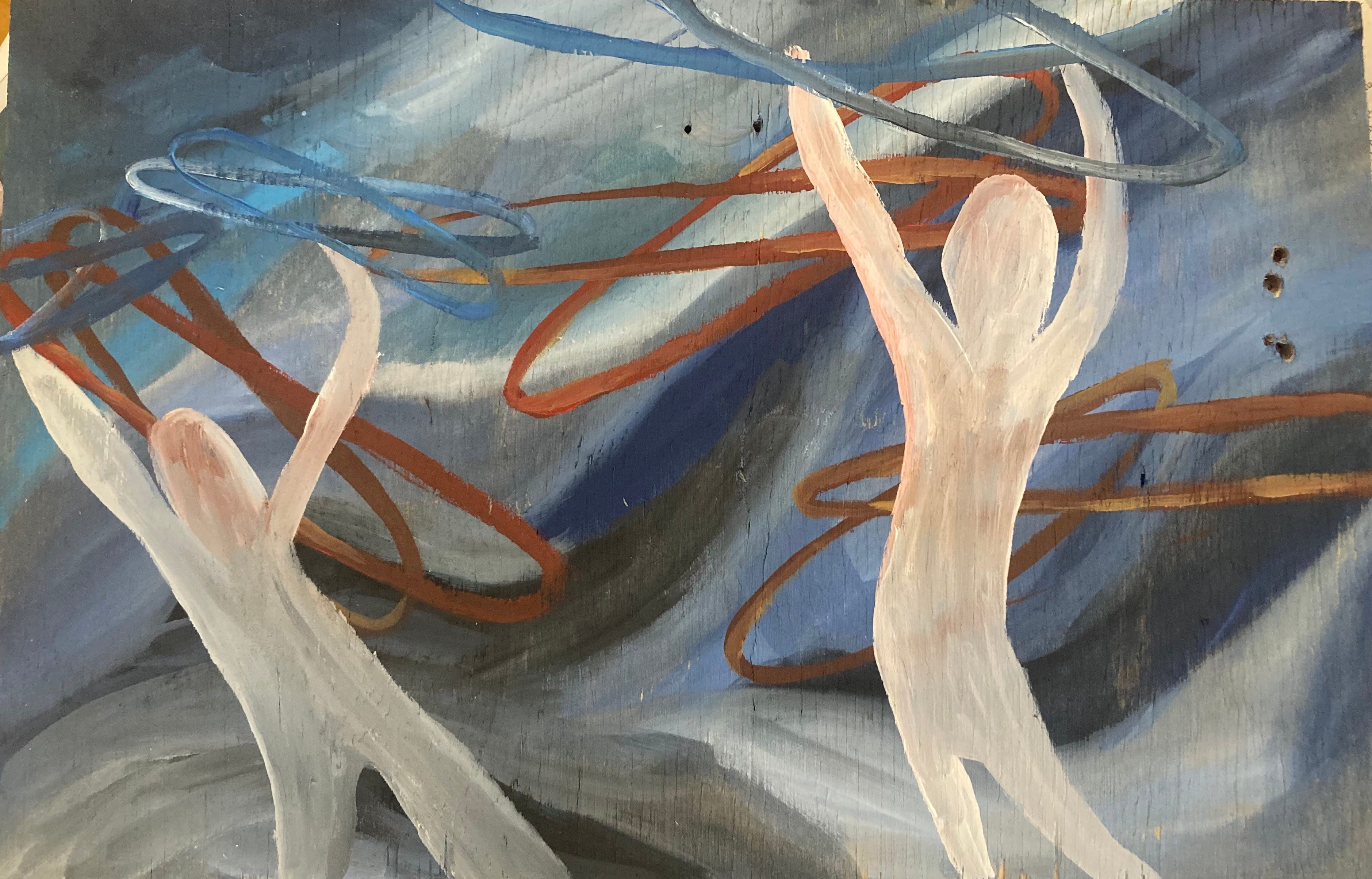
Attention is such a generous gift. Chris Beecroft who got us all writing substacks shares this so freely and I love that Tom’s first one is a birthday wish for Chris… a little reciprocity between a few close friends breaking through the technological disconnect. Chris, this is my little nod to you to say thank you for encouraging me to sit down and write in the moments between conversations.
falling
The last few years I’ve watched the weather come and go. Usually the same way everyone else does, through my window. Mine is a plastic, aluminum-lined glass share-house window in the little room no one else wanted. It faces west on unceeded Noongar Boodja near Walylup and eases me into the morning light. Some days I watch the weather a little more closely, for other people. They’re busy worrying about other aspects of our world so in exchange for some money I pay extra attention and write it down or ring them up.
Growing-up has taught me science isn’t innocent the way I once thought it was. I’m learning this in many different ways at the moment but one of them is through the weather changing. The dominance of euro-centric ways of viewing is thinly veiled, it’s just hard to see when you’re the veil. The view outside my window is my own. A wadjella’s view. I had to read a few essays to start my mind turning over on the colonial violence I practice and occupy looking out my window at Noongar boodja.
through sky
Through looking at the sky, my mind has been turning over on the way weather has a colonial history.
On Noongar boodjar most of our rainfall comes in Makuru, ‘winter’ from cold fronts. The huge Indian Ocean runs into the continent, forever colliding through the airmass boundaries they pass between each other. The vastness of the east-west/sea-land boundary makes Western Australia a special place to forecast for from a wadjella window view.
A wadjella window view specialises in categorisation, studying things in isolation so the simplicity of the two air-masses, continental/maritime or land/ocean, mean things are a little more straightforward and we can come to terms with some aspects of interrelatedness that First Nations knowledge systems are so fluent in.
More than a decade ago some wadjella scientists noticed that rainfall inland through the wheatbelt has decreased by so much more than rainfall by the coast. They realised that without the coastal forests catching the moisture and passing it back to the sky through evapotranspiration the rainfall never makes it inland.
It runs deeper than this though. The lack of water inland has meant Perth has begun desalinating. Desalination is more expensive. Our water is more expensive. The onus of this, falls disproportionately on households who have less efficient appliances, exacerbating Perth’s socioeconomic divide.
Our future and the forests’ futures are tied together.
Country.
A lot of these thoughts are coming from study at Curtin Uni, Centre for Aboriginal Studies where I listen and think about how Country is more like a person in the different worldviews First Nations societies. Country has agency, is emotional and talks back.
Country has found a way to make us notice water within the wadjella capitalist worldview that’s fixated on money, pinching us through money in the cost of desalinated water, telling us wadjellas to listen up.
Country’s fresh water has been disrespected since Settler invasion when C.Y.O Conner blew up the limestone bridge that kept the ocean from the Derbarl Yerrigan and the Derbarl Yerrigan was 98% fresh. I didn’t know this because The Swan River out the wadjella window is salty and C.Y.O. Conner is a hero of water engineering for a pipeline between Mundaring and Kalgoolie.
In forecasting out the wadjella window recently, I’ve been noticing that I’m falling through sky Country that is sovereign to Whadjuk Noongar people who deserve wadjella respect and attention in our changing climate.
things I’ve been reading by First Nations authors tied to the thoughts above…
Carpenteria - Alexis Wright Representations of Waanyi Country in the Gulf of Carpenteria have taught me to reimagine the way Country has agency.
Sand Talk - Tyson Yunkaporta The descriptions of western science from an Apalech science perspective helped me reflect.
Marinate - Cassie Lynch An essay that emphasised to me how deep time Noongar knowledge is related Country and how shallow wajella knowledge is by comparison (https://preppers.gallery/marinate-v/)
things I’ve been reading by Settler authors tied to the thoughts above…
On Pluviality- Sarah Nuttall An essay that crystallised the idea that weather has a colonial history.
The effect of land clearing on rainfall and fresh water resources in Western Australia: a multi-functional sustainability analysis- Mark Andrich Paper on coastal forest, desalination, socio-economic inequality link.
WA History: CYO Conner https://culture.wa.gov.au/feature/c-y-oconnor
Love this Peggy :)
Amazing, Peg <3